Welcome

The smART studio at DeWitt Middle School emphasizes three main tenets; creating and learning through design process thinking (studio habits of mind), thoughtful verbal and written reflection on Visual Language and it's conversation with the self and humanity, and connections between each other and the world outside our school environment.

So, find your interest and feed the curiosity! Investigate, explore, sketch, create, review, revise, inspire, be inspired and create again. The cycle of learning—the cycle of design—is more than a privilege, it's the pathway to understanding. Through the Arts we cultivate self-directed, self-motivated habits of mind that lead us through a life-long pursuit of learning and participating in society.

Showing posts with label Sketchbook. Show all posts

Monday, December 3, 2012

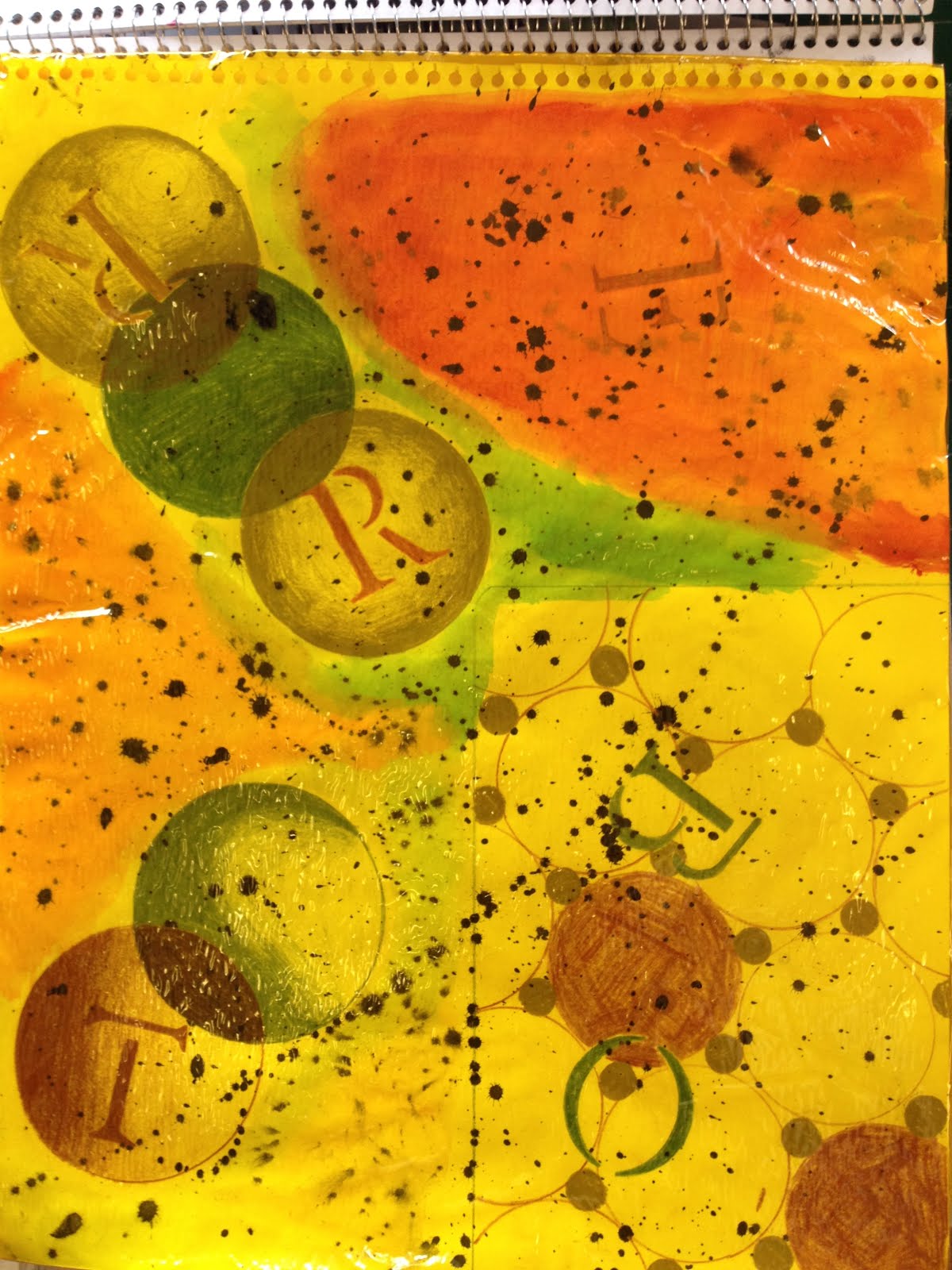
Visual Journal Challenge!! (3)

Visual Journal Challenge: A person you admire.

•Create a visual journal page based on a person who has inspired you.
•Creatively weave at least 5 descriptive words into your design.
•Use 3 different ART MEDIUMS (including one you have never used on a VJ before!)


And the student response...


Friday, November 30, 2012

Visual Journals!! (2)

Visual Journal Challenge.


The Challenge:
•Choose a song that you like. (It must be school appropriate.)
•Design a page inspired by the song.
•Include at least three lines of lyrics
•Include at least 3 different ART MEDIUMS!


And the student responses....


Visual Journal Unit!!

The visual journal is a creative way to explore, express and record your thoughts, ideas, life’s experiences, emotional reactions and our inner world. The visual journal uses both visual and verbal communication, strengthening the understanding of both. It is also a tool to becoming a more observant person, to being more creative, more willing to take the risks necessary to learn. It is also about discovering our own ways of learning, as each person has a unique and individual thinking process.

In essence, the visual journal is not only a major component in our art making process, but in our process of learning about the world!!

Start one today!!


Search 'Visual Journal' on this blog to see some student work form Quarter 2!!

Monday, February 13, 2012

Daily Visual Journal 2.13.12


The Colossal and Notable Graffiti by Blu

*Thank you Spackenkill art program for posting a great collection of contemporary artists and art sites!
This image was found through their website.

Friday, February 10, 2012

Daily Visual Journal 2.10.12


The Great Wave off Kanagawa (神奈川沖浪裏 Kanagawa Oki Nami Ura?, lit. "Under a Wave off Kanagawa"), also known as The Great Wave or simply The Wave, is a woodblock print by the Japanese artist Hokusai. An example of ukiyo-e art, it was published sometime between 1830 and 1833[1] (during the Edo Period) as the first in Hokusai's series Thirty-six Views of Mount Fuji (Fugaku sanjūrokkei (富嶽三十六景?)), and is his most famous work.

Thursday, February 9, 2012

Daily Visual Journal 2.9.12


J. M. Flagg's 1917 poster, based on the original British Lord Kitchener poster of three years earlier.
Great example of personification.

Wednesday, February 8, 2012

Daily Visual Journal 2.8.12


Photo portrait by Steve McCurry. As seen on the cover of National Geographic June 1985.

*Learn more about the story:
http://ngm.nationalgeographic.com/2002/04/afghan-girl/index-text

Monday, February 6, 2012

Daily Visual Journal 2.6.12


Pablo Picasso, The Tragedy, 1903, oil on wood, 1.053 x .690 m (41 7/16 x 27 3/16 in.), National Gallery of Art, Washington, Chester Dale Collection

Friday, February 3, 2012

Thursday, February 2, 2012

Daily Visual Journal 2.2.12

The first five minutes of every class is dedicated to a written reflection in our Visual Journals (Sketchbooks). Please remember to answer, in complete sentences, the following questions:

1. What do you think the artist is trying to convey in this piece? What is the message, feeling, call to action, or idea that you think about when you observe this artwork?
2. What clues did the artist use (thinking about our visual language: elements of art and principles of design) to convey the message, feelings or ideas? Remember to be specific in telling me where you see the clues!


J.M.W. Turner, Steamer in a Snowstorm. 1842. Oil on Canvas. 91.5 x 122 cm. Tate Gallery, London.